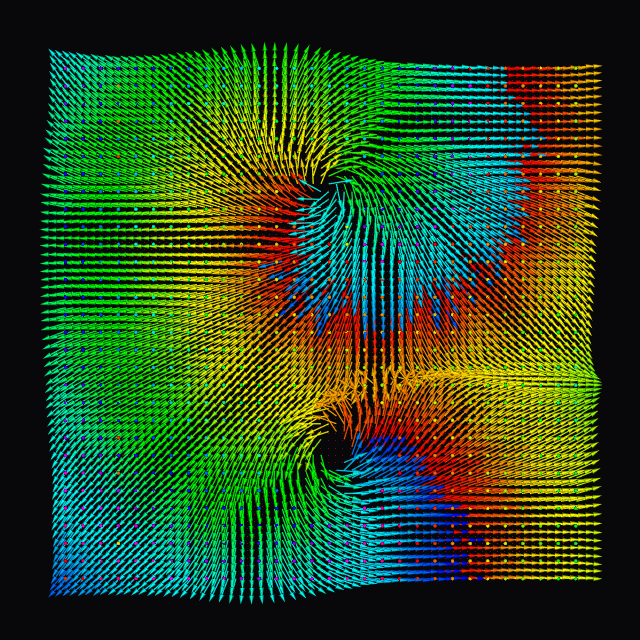
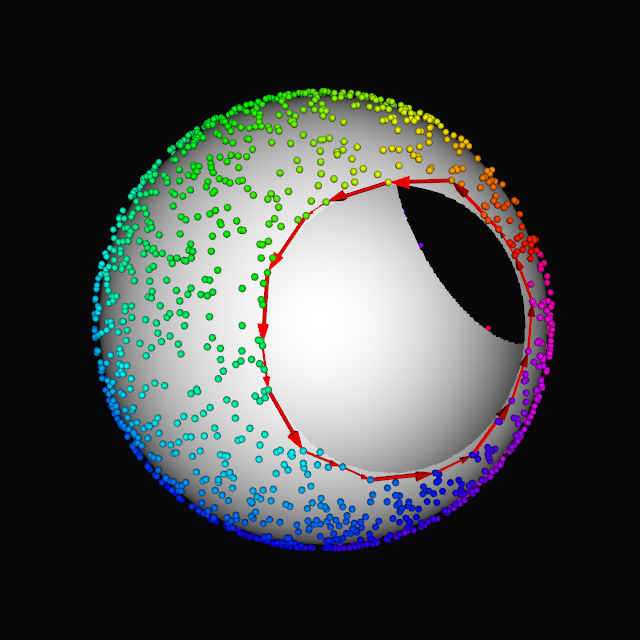
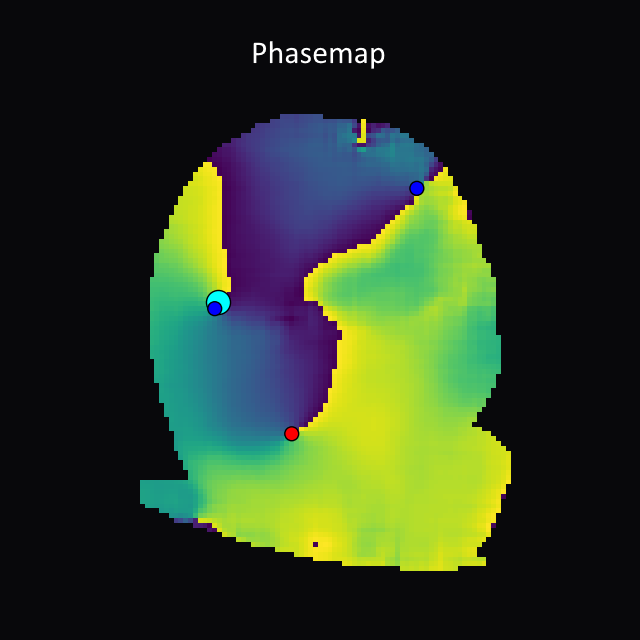
For an overview of our past and current research please check our research page.
Welcome to the Biophysics Research Group at Ghent University, led by Prof. Nele Vandersickel. We study cardiac arrhythmias through a new lens: topology.
Our goal is ambitious: to build a unified framework for reentry-based arrhythmias that lead to novel treatments. By combining computational models with clinical data, we translate theoretical insights into clinical solutions. This approach has already led to a novel ablation therapy for atrial tachycardia1,2,3,4. We have received the AstraZeneca award for this research .
We believe science should be open and collaborative. That’s why we continue to develop OpenDGM, an open-source platform for analyzing electro-anatomical data using phase mapping, network theory, and topology. This enables flexible pipeline development across computational, experimental, and clinical datasets.
Join us in rethinking cardiac dynamics.
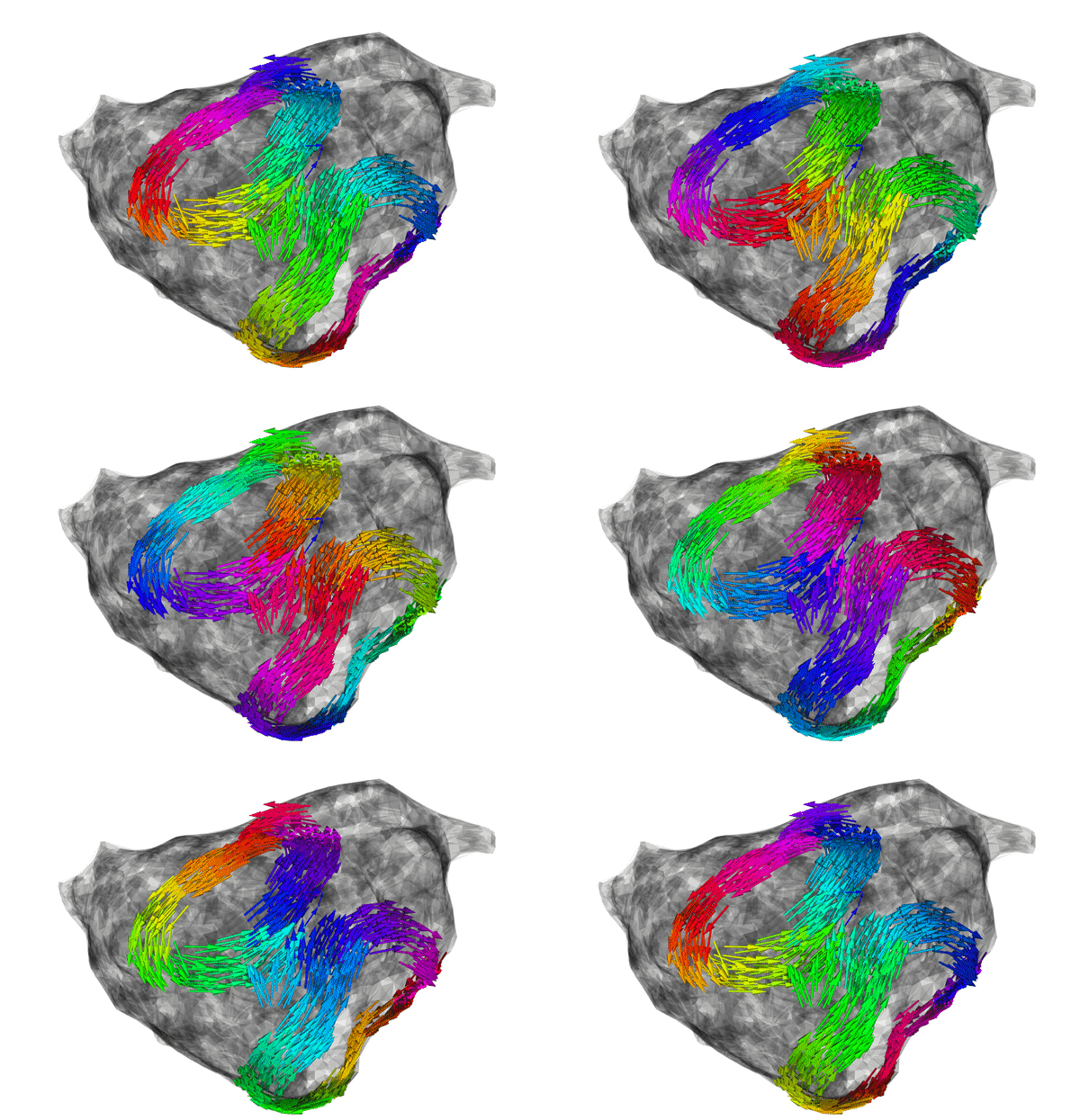
- 1 DGM-TOP: automatic identification of the critical boundaries in atrial tachycardia
- 2 Impact of topology on the number of loops during macro-re-entrant atrial tachycardia
- 3 Atrial Topology for a Unified Understanding of Typical and Atypical Flutter
- 4 How a Topological Mindset May Offer Extra Control During Mapping and Ablation of Left-Sided Reentrant Atrial Tachycardia